Surfing in Agadir and Taghazout: A Beginner’s Guide
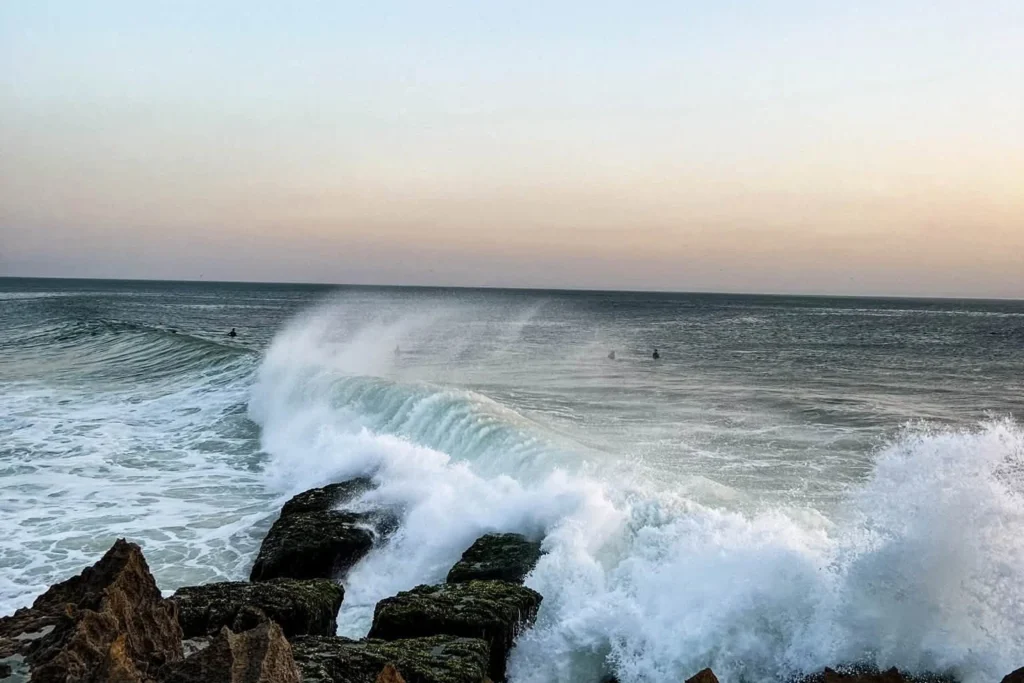
Surfing in Agadir is one of the easiest ways to start the sport in Morocco. The Atlantic coast north of the city has a mix of gentle sandy beaches for beginners and famous right-hand point breaks for experienced surfers, and the surf village of Taghazout sits about 30 minutes up the road. You do not need to be sporty or have surfed before: most complete beginners are up on the board, riding white water, within their first lesson.
This guide explains how the coast is organised, which kind of spot suits which level, when conditions are generally best, what a first lesson involves and what to bring. Surf conditions change with the swell and the wind every day, so we describe patterns rather than promise a particular wave, and we avoid inventing details such as exact wave heights or water temperatures.
In This Guide
- Quick Answer: Surfing in Agadir at a Glance
- How the Coast Around Agadir Works for Surfing
- Beginner-Friendly Surf Spots
- Spots for Experienced Surfers
- When Is the Best Time for Surfing in Agadir?
- What a First Surf Lesson Involves
- How to Progress After Your First Lesson
- What to Bring
- Agadir or Taghazout: Where Should You Stay for Surfing?
- Recovering After a Surf Session
- Conclusion
- Surfing in Agadir FAQ
Quick Guide
- Best for beginners
- Soft, sandy-bottom beach breaks between Agadir and Taghazout
- Best for experienced surfers
- The point breaks around Taghazout, such as Anchor Point
- Main swell season
- Autumn and winter; summer is generally smaller
- First lesson
- 2 hours, with board and wetsuit included, in groups of up to five students per instructor
- Do I need experience?
- No, lessons start from complete beginner level
- Where to base yourself
- Agadir for convenience, Taghazout for a surf-village atmosphere
Quick Answer: Surfing in Agadir at a Glance
For beginners, the best surfing near Agadir is on the sandy beach breaks along the coast between the city and Taghazout, where the waves are softer and the sea floor is sand rather than rock. Experienced surfers head to the point breaks around Taghazout, which are known for long, powerful waves in the winter swell. The main surf season runs through autumn and winter, although beginners can still find suitable days outside it. If you have never surfed, book a lesson with a local instructor, who will choose the spot each day to match the conditions and your level.
How the Coast Around Agadir Works for Surfing
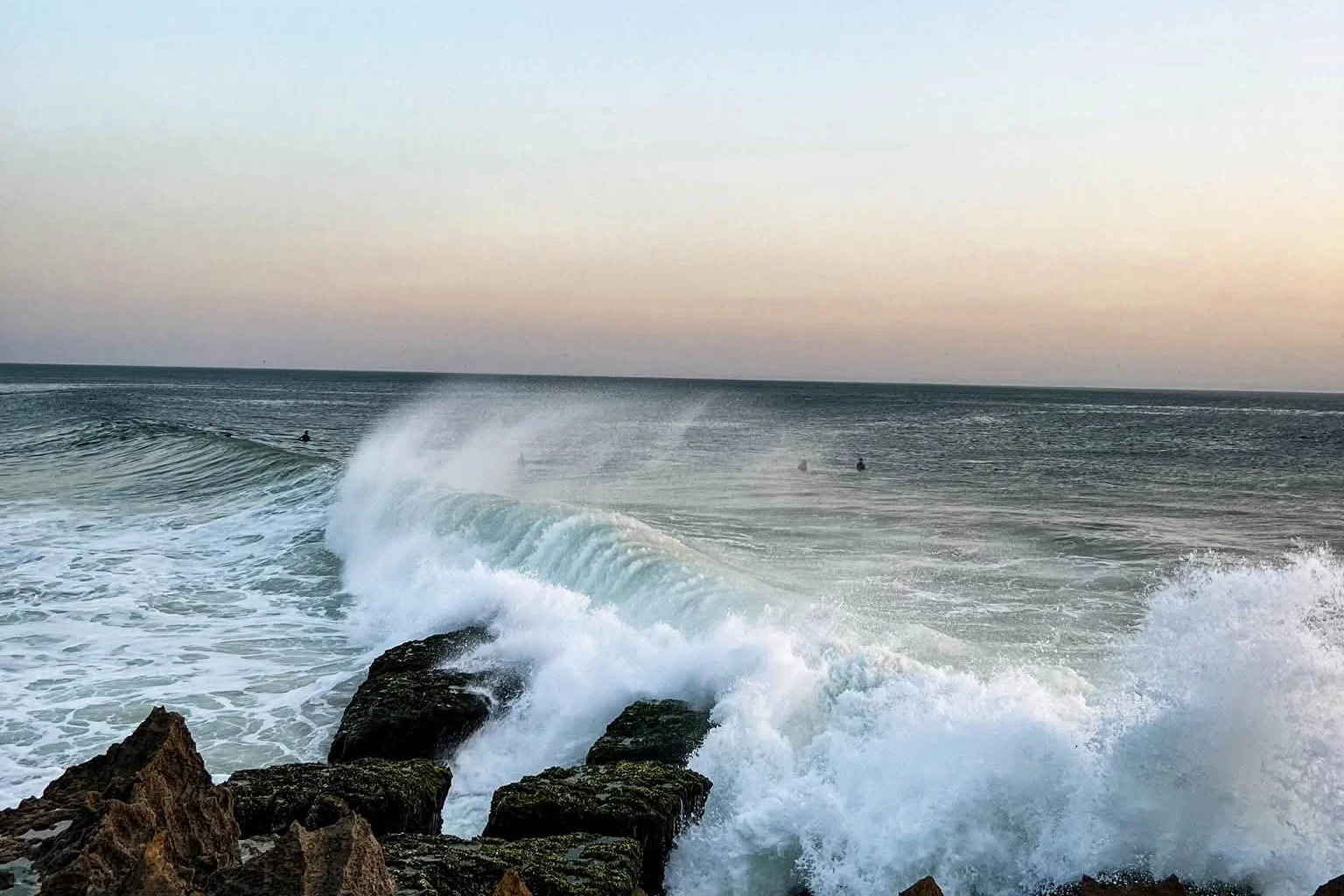
Think of the coast in two halves when planning surfing in Agadir. Agadir itself has a long, wide beach that faces the open Atlantic, and the stretch north towards Taghazout is a mix of sandy beaches and rocky headlands. The sandy beaches produce gentler waves that break over sand, which is what learners want. The rocky headlands create point breaks, where a wave peels along a reef or rock shelf, and those are for surfers who can already paddle, read the sea and handle a bigger swell.
That difference is the most useful thing to understand before you book anything. A famous spot is not automatically a good spot for you, and a place with an intimidating reputation may be perfectly calm on a small day. If you are unsure which category you fall into, assume beginner and let an instructor assess you.
Beginner-Friendly Surf Spots
Beginners learning surfing in Agadir are usually taught on soft, sandy-bottom waves between the city and Taghazout. Travel guides commonly recommend beaches such as Banana Beach and Panoramas Beach for learners, though names and conditions overlap and travel guides do not always agree. The exact beach on any day matters less than the conditions, which is why instructors pick the spot each morning.
If you want to see the surf village itself first, the half-day Taghazout surf coast trip includes time to watch surfers at Anchor Point and walk the beach before you decide whether to book a lesson. Our Taghazout guide covers the village in more detail.
Spots for Experienced Surfers
Around Taghazout, a series of right-hand point breaks gives surfing in Agadir its best-known waves and draws surfers from across Europe. Anchor Point is the best known, a long wave that works from a modest size and holds up when the swell is large. Killer Point is a faster, steeper reef break. Both are a step up from learner waves, and neither is a place to try your first stand-up.
Surf guides often rate the inside section of Anchor Point, sometimes called Panoramas, as an intermediate level, which can be confused with the gentler Panoramas Beach, so check which one you are being told about. Local surf schools and instructors can advise on the day, and they will usually advise you not to paddle out if the conditions are beyond your level.
When Is the Best Time for Surfing in Agadir?
The main swell season on this coast is autumn and winter, roughly November to March in many guides. Waves are generally bigger and more consistent then, which suits intermediate and advanced surfers. Summer is usually smaller and can be choppy because of onshore wind, although beginners often still have good days, since small waves are exactly what they need.
That makes the best time for surfing in Agadir depend on your level. Experienced surfers chasing size should look at winter. Beginners can learn in most months, and may prefer the smaller, more forgiving conditions outside the peak swell. For the weather side of the trip, see our month-by-month guide to the best time to visit Agadir.
What a First Surf Lesson Involves
A typical first lesson of surfing in Agadir follows the same order. You start on the sand with a warm-up and a short lesson on technique, including how to paddle, how to pop up onto the board and how to position your feet. A safety briefing covers currents and the basic rules of the water. Then you go into the sea with the instructor beside you and spend as much of the time as possible actually catching waves.
Our surfing lessons in Agadir run for two hours, with the board and wetsuit included, and with a maximum of five students per instructor so that you get personal attention. Most beginners stand up on their first day, riding the white water of a broken wave rather than an unbroken green one. That is normal, and it is the right way to start.
Surfing Lessons Agadir
A two-hour lesson with board and wetsuit included, suitable for complete beginners
View Tour →How to Progress After Your First Lesson
After you can stand and ride white water consistently, the next steps are catching unbroken green waves, learning to turn, and choosing your own position in the lineup. Intermediate surfers can join guided sessions at the better-known spots, where an instructor helps with positioning and video analysis. Take your time with each step of surfing in Agadir, because rushing into bigger or more crowded breaks is the most common way for improvers to have a bad session.
What to Bring
- Swimwear and a towel: the board and wetsuit are provided by the surf school on our lessons.
- Sunscreen and a hat: the Atlantic sun is strong even on cooler days.
- Water and a snack: surfing is more tiring than it looks.
- A change of clothes: you will want dry layers afterwards, particularly in the cooler months.
- Cash: lessons are paid in cash on the day.
General water-safety sense applies to surfing in Agadir as well. Read our guide to staying safe in Agadir for broader advice on beaches and outdoor activities, and always follow the instructor’s directions about where it is safe to swim.
Agadir or Taghazout: Where Should You Stay for Surfing?
For surfing in Agadir, the city is the practical choice if you want a wide range of hotels, restaurants and other activities alongside your surfing. Taghazout suits travellers who want a laid-back surf-village atmosphere, with cafes and surf shops close at hand. Either way, the surf coast is only about 30 minutes apart, so you can combine both. Our guide to the best beaches near Agadir compares Agadir Beach, Taghazout and Legzira for different kinds of trips.
Recovering After a Surf Session
Surfing in Agadir uses muscles most people do not often use, and shoulders and upper back are usually the first to complain. Many visitors follow a lesson day with a hammam and massage, which is a traditional way to relax after exercise and is easy to fit into the afternoon.
Conclusion
Surfing in Agadir works for almost everyone, because the coast offers both gentle beaches for learners and well-known point breaks for experienced surfers. Choose by level rather than by reputation, remember that the main swell season is autumn and winter while smaller summer waves suit beginners well, and let a local instructor choose the spot on the day. For more on what the region offers beyond the water, see our guide to things to do in Agadir, or the wider tours and activities page. For independent surf-spot background, the Surf Atlas guide to Taghazout is a useful reference.
Surfing in Agadir FAQ
Is Agadir good for beginner surfers?
Yes. The sandy beach breaks between Agadir and Taghazout have softer waves that suit learners, and lessons start from complete beginner level.
When is the best time to surf in Agadir?
The main swell season is autumn and winter, which suits intermediate and advanced surfers. Beginners can learn in most months, and smaller summer waves are often easier to start on.
Do I need to be able to swim to take a surf lesson?
You should be comfortable in the water. Tell the instructor about your swimming ability when you book, so the lesson can be planned around it.
How long does a beginner surf lesson last?
Our surfing lessons in Agadir last two hours, including a beach warm-up, technique session and safety briefing, with time in the water.
Is the equipment included?
Yes. The surfboard and wetsuit are included in our lessons, and groups are limited to five students per instructor.
Should I stay in Agadir or Taghazout to surf?
Agadir offers more hotels and other activities, and Taghazout has a more relaxed surf-village feel. They are about 30 minutes apart, so either works for reaching the surf.
Ready to experience Agadir?
Ready to experience Agadir? Book direct with a local guide.
Explore Tours & Activities


Comments
Be the first to share your experience or ask a question.