Souk El Had Agadir: the largest covered market in Morocco
Local guide • Updated August 2026
Souk El Had Agadir is the largest covered market in Morocco and the beating commercial heart of the city. Behind its ochre walls, more than 6,000 stalls fill a huge walled enclosure, selling everything from spices and argan oil to leather, ceramics and fresh produce.
What is Souk El Had Agadir

Unlike the ancient medinas of Marrakech or Fez, Souk El Had Agadir is modern, rebuilt after the 1960 earthquake, yet it keeps an authentic, everyday atmosphere. This is where locals do their weekly shopping, which is exactly what makes the visit worth it.
The market is organised by trade behind numbered gates, so spices sit near the food entrances while leather, jewellery and crafts cluster further in. It is a living market, not a tourist showcase built purely for visitors.
What to buy at Souk El Had
For authentic souvenirs, look for pure argan oil, saffron, handmade pottery, leather babouches and Berber silver. Prices are negotiable almost everywhere, so start around half the asking price and settle somewhere in the middle.
Always agree the price before you pay, and bring small change. A guided first visit to Souk El Had Agadir makes bargaining far easier if this is your first Moroccan market. For a wider look at shopping across the city, see our Agadir shopping guide.
Opening hours and best time to visit
The market opens daily except Monday, roughly from 9am to 8pm. The busiest and most colourful day is Sunday, the had that gives the market its name.
Come early in the morning to watch it wake up and to beat the midday heat and crowds. If you want to bargain seriously, Tuesday to Thursday mornings are quieter than the Sunday rush, giving you more room to negotiate. Allow at least two hours to explore properly, more if you plan to browse every section.
How to visit and practical tips
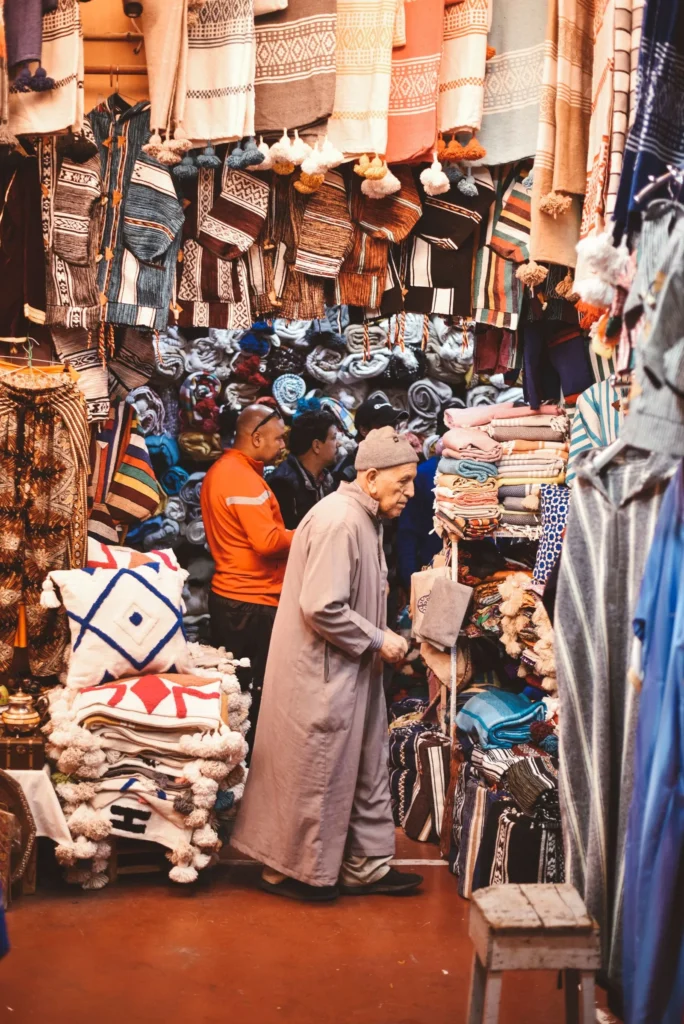
The market sits in the city centre, walkable from most hotels or a short petit-taxi ride away. Wear comfortable shoes, keep an eye on your belongings in the busy lanes, and carry cash, since most stalls do not accept cards.
You can learn more about the city on Wikipedia. For a guided introduction, our Agadir City Tour covers the best stalls, or pair a visit with a cooking class that starts with a market walk to buy ingredients.
The story behind the market
Agadir was almost entirely rebuilt after the devastating 1960 earthquake, and Souk El Had Agadir was reorganised as part of that modern city plan. Today it blends that planned layout with centuries-old trading traditions, so you get the buzz of a real Moroccan souk with easier navigation than an older, mazelike medina.
Walking its lanes is one of the most authentic things to do in Agadir. You see how families shop, how spices are weighed and blended, and how artisans still sell directly to the people who use their goods every day.
Local tips
Greet stallholders with a smile before you start bargaining, it sets a friendlier tone than diving straight into a price negotiation. If you are not buying, it is still polite to browse rather than photograph stalls up close without asking first.
Bring a reusable bag for produce and spices, and try to visit outside the midday heat if you plan to spend a couple of hours walking the lanes.
What else is nearby
The market pairs naturally with the rest of central Agadir. From here you are a short ride from the Marina, the beach promenade and the Kasbah viewpoint, so it fits neatly into a half-day of sightseeing.
Many visitors combine a visit here with a guided city tour in the morning and a relaxed lunch afterwards, turning a simple shopping trip into a full cultural morning.
Who should visit Souk El Had
This market is a must for first-time visitors, food lovers, and anyone who wants to see the real, everyday side of Agadir beyond the beach resorts. It rewards curious travellers who enjoy wandering, tasting and discovering as they go.
Those short on time can still get a genuine feel for the place in under an hour by focusing on the spice and food sections near the main entrance, rather than trying to cover every gate in one visit.
Visit Souk El Had With a Local Guide
Our Agadir City Tour includes a guided walk through the market, or combine it with a hands-on cooking class that starts with buying ingredients here.
See the full itinerary and current pricing on the booking pages, or browse the wider Agadir tours and activities.
Souk El Had Agadir FAQ
Is Souk El Had open on Monday?
No, Souk El Had is closed on Mondays. It opens every other day, with Sunday being the busiest.
Is it safe to visit the souk?
Yes, it is safe and family-friendly. Just keep valuables secure in the crowded lanes, as you would in any busy market.
Can I pay by card at the souk?
Most stalls are cash only, so bring dirhams in small denominations for easier bargaining.
Is bargaining expected at Souk El Had?
Yes, negotiating the price is normal and expected in most sections, especially for crafts and souvenirs. Fixed-price grocery stalls are the main exception.
How big is Souk El Had Agadir?
It is the largest covered market in Morocco, with more than 6,000 stalls organised by trade behind numbered gates.